

 ไทย
ไทย

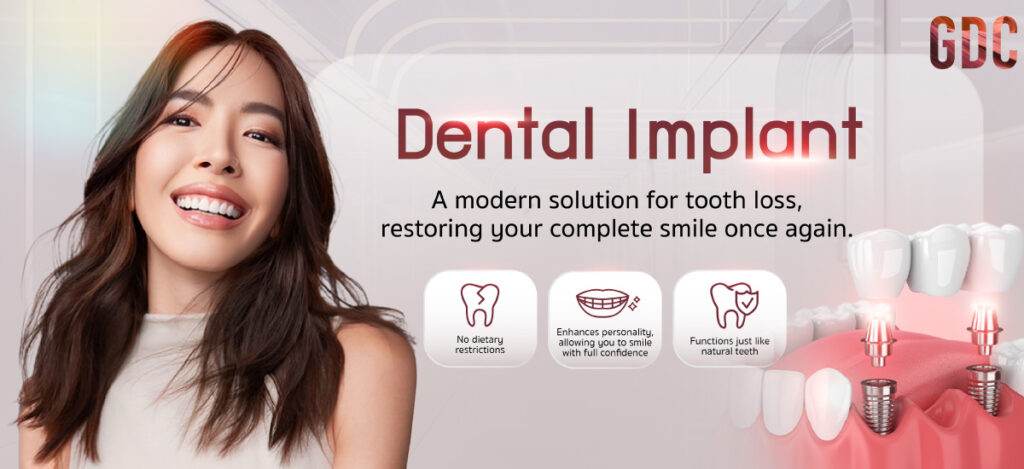
Dental Implants : A Modern Solution for Tooth Loss, Restoring Your Complete Smile
What is a Dental Implant ?
A Dental Implant is an advanced dental technology that involves placing a “titanium post” into the jawbone to serve as an artificial root, replacing a missing natural tooth. A dental crown or bridge is then attached on top, allowing you to chew, speak, and smile with the same confidence as with natural teeth.
Implants are precisely designed to fit your jaw’s anatomy, offering strength, durability, and a long-term solution. They are a superior alternative to removable dentures, which can often feel loose, shift uncomfortably, or cause discomfort.

Advantages of Dental Implants
Feels and Functions Like a Natural Tooth
Because an implant is securely anchored in the jawbone, it provides a sensation and function closest to a natural tooth. You can chew without worrying about it becoming loose or moving.
Preserves Jawbone Health
After tooth loss, the underlying jawbone gradually deteriorates. An implant stimulates the bone, helping to maintain its strength and prevent resorption, which is crucial for preserving your facial structure and lip support in the long term.
No Need to Grind Down Adjacent Teeth
Unlike a traditional dental bridge, which requires grinding down adjacent healthy teeth for support, an implant stands independently. This leaves your natural teeth untouched and intact.
Aesthetically Pleasing and Natural-Looking
The crown placed on the implant can be custom-designed to match the color and shape of your natural teeth, ensuring a seamless and natural blend with your smile.
Long Lifespan
With proper care and maintenance, dental implants can last for over 10–20 years, and in many cases, can last a lifetime.
The Dental Implant Procedure
- Comprehensive Oral Examination
Your dentist will take X-rays or a 3D scan to assess your jawbone density, overall oral health, and meticulously plan the ideal position for the implant. - Personalized Treatment Planning
Based on the examination results, your dentist will create a customized treatment plan tailored to your specific dental and bone structure, ensuring the safest and most precise outcome. - Implant Placement
The titanium post is surgically placed into the jawbone under local anesthesia. This procedure typically takes 1–2 hours. A healing period of 3–6 months follows, allowing the bone to fuse securely with the implant (a process called osseointegration). - Attaching the Abutment and Crown
Once the implant has fully integrated with the bone, your dentist will attach an abutment (connector) and then the custom-made crown. This crown is designed to match the color and shape of your natural teeth, restoring both beauty and function to your smile. - Ongoing Care and Follow-up
Regular check-ups and professional cleanings with your dentist are essential to ensure the long-term health and stability of your implant
Post-Implant Care
Proper aftercare is crucial for optimal healing, successful integration of the implant, and ensuring its long-term functionality.
- Brush at least twice daily and floss regularly.
Maintaining excellent oral hygiene is paramount after getting an implant. Plaque and food debris can lead to inflammation of the gums around the implant. Use a soft-bristled toothbrush and brush gently, especially during the first 1–2 weeks after surgery. Daily flossing or using interdental brushes is essential to clean between teeth and prevent bacterial buildup. - Avoid chewing hard foods initially.
For the first 1–2 weeks after implant placement, avoid hard, sticky, or crunchy foods like hard nuts, popcorn, or large pieces of meat. The excessive pressure can cause swelling or disrupt the healing process. Opt for soft foods like porridge, soup, congee, or soft fruits to promote faster healing and reduce infection risk. - Refrain from smoking, as it can hinder healing and integration.
Smoking directly impacts wound healing and the fusion of the implant to the bone. Nicotine reduces blood flow and oxygen in the tissues, leading to slower healing and a higher risk of infection. It is highly recommended to quit smoking for at least 2–4 weeks before and after the procedure for the best outcome and to maximize the lifespan of your implant. - Visit your dentist every 6 months for check-ups and cleanings.
Even with excellent home care, regular dental visits every 6 months are necessary. Your dentist will check the health of your gums, the stability of the implant, and perform professional cleanings in hard-to-reach areas. Regular monitoring helps prevent and address minor issues early, before they can develop into problems that affect the long-term success of your implant.

Why Choose GDC Dental Clinic for Your Dental Implants ?
At GDC Dental Clinic, our dental implants services are performed by dentists specialized in oral surgery and implantology. We utilize 3D Digital Implant Planning technology to ensure precise implant placement, minimizing risks and ensuring the highest level of safety and predictable results.
Furthermore, we exclusively use premium-quality implant materials, guaranteeing strength, longevity, and the most natural-looking outcome for your smile.